
Sept. 16, 2025
Delivering the Long and Winding Roads
250 years of mail delivery, no matter the distance
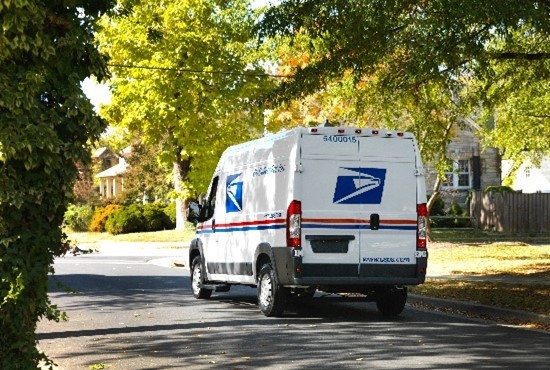
WASHINGTON — From the busiest cities to the most remote locations, the U.S. Postal Service has been delivering mail and connecting the nation for 250 years.
Throughout its history, the Postal Service has used various forms of transportation to ensure customers receive their mail and packages. Some delivery routes are served by more traditional means — vehicles and walking — while others are served by less conventional methods such as dog sleds, boats, donkeys, and bicycles. No matter the transportation choice, the delivery routes all have one thing in common: dedicated mail carriers.
Postal Geography
What began as a handful of routes crisscrossing the United States has grown into a network of more than 234,000 delivery routes encompassing all 50 states, the District of Columbia and the five major U.S. territories — Puerto Rico, U.S. Virgin Islands, Guam, Northern Mariana Islands and American Samoa.
To operate more efficiently, the Postal Service organized the nation into four geographic regions — Atlantic, Central, Southern (including Puerto Rico and the U.S. Virgin Islands), and WestPac (Western and Pacific states as well as Guam, Northern Mariana Islands and American Samoa). The states and territories within the four regions are divided into 50 districts. Some states are combined to form one district (for example, Kentucky-West Virginia) while other states are divided into multiple districts (such as California, which has six districts).
Longest Route in the Nation
The longest round trip route in the nation is in Idaho-Montana-Oregon District, in the town of Sidney, MT. This town of more than 6,000 residents is less than 10 miles from the North Dakota border. The letter carrier drives 195 miles every day, delivering mail to 305 mailboxes.
Notable Long Routes
Other long routes delivered include:
- Atlantic Area:
- Maryland District: The small town of Accident in western Maryland is home to the state’s longest route. Rural Carrier Paula Artice travels 95 miles and serves 416 mailboxes on her route.
- New York 3 District: The route served by the Addison Post Office encompasses 120 miles serving 404 mailboxes.
- North Carolina District: The longest route checks in at 119 miles in Lansing.
- Central Area:
- Illinois 2 District (western Illinois, near the Missouri border): Pleasant Hill, IL, Rural Carrier John Springer drives 146 miles to deliver to 385 mailboxes, serving 985 residents.
- Kentucky-West Virginia District: The longest route is in Grayson, KY. Rural Carrier Jolene Kees travels 135 miles and serves 479 mailboxes a day.
- Ohio 1 District: This route starts and ends in Cadiz. Rural Carrier Nicole Cox drives 111 miles to deliver to 356 mailboxes. The route includes two ZIP Codes in two counties, and Cox switches between ZIP Codes 11 times during delivery.
- Southern Area:
- Arkansas-Oklahoma District: The Mangum, OK, route is 183 miles long, delivering to 277 mailboxes.
- Louisiana District: The longest route can be found in Arcadia. It spans 164 miles and serves 279 mailboxes.
- Texas 3 District (includes San Antonio, Austin, El Paso): The longest route can be found in Abernathy. The carrier delivers to 219 mailboxes and drives 123 miles each day.
- WestPac Area:
- Arizona-New Mexico District: The Grady, NM, route is 149 miles.
- California 5 District (includes Los Angeles and Orange County): The route serving Los Angeles is not long in terms of distance but because of density, the route for ZIP Code 90046 delivers to 34,434 addresses.
- Hawaii District: The route served by the Barrigada Post Office in Guam is 68 miles, delivering to more than 1,000 mailboxes.The Barrigada Post Office is the westernmost Post Office in the USPS network.
There are dozens more lengthy routes served by the Postal Service to be found in each state or U.S. territory. For information or interviews about the locations listed above, or to inquire about the routes in other locations, contact your local Corporate Communications representative. All local/state media contact information is available in our online newsroom.
# # #

The United States Postal Service is an independent federal establishment, mandated to be self-financing and to serve every American community through the affordable, reliable and secure delivery of mail and packages to more than 170 million addresses six and often seven days a week. Overseen by a bipartisan Board of Governors, the Postal Service is celebrating its 250th year of service to customers amidst a network modernization plan aimed at restoring long-term financial sustainability, improving service, and maintaining the organization as one of America’s most valued and trusted brands.
The Postal Service generally receives no tax dollars for operating expenses and relies on the sale of postage, products and services to fund its operations.
For USPS media resources, including broadcast-quality video and audio and photo stills, visit the USPS Newsroom. Follow us on X, formerly known as Twitter; Instagram; Pinterest; Threads; and LinkedIn. Subscribe to the USPS YouTube Channel and like us on Facebook. For more information about the Postal Service, visit usps.com and facts.usps.com.