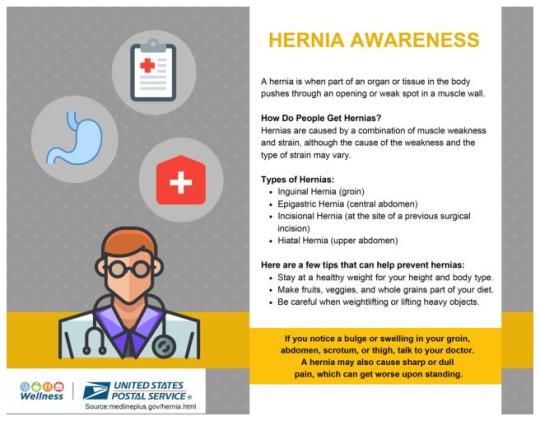
A hernia is a sac formed by the lining of the abdominal cavity. The sac comes through a hole or a weak area in the layer of the belly wall that surrounds the muscle. Hernias may be present at birth, but the bulge may not be evident until later in life. Usually, there is no clear cause of a hernia, but they sometimes occur due to the following:
n Heavy lifting.
n Straining while using the toilet.
n Activities that raise pressure in the belly.
Any activity or medical problem that increases pressure on the belly wall and muscles may lead to a hernia, including:
n Long-term (chronic) constipation.
n Chronic coughing or sneezing.
n Enlarged prostate.
n Extra weight.
n Poor nutrition.
n Smoking.
n Overexertion.
There are usually no symptoms of a hernia other than a visible bulge. Some people may have discomfort or pain that may worsen when standing, straining, or lifting heavy objects. In time, the most common complaint is a bump that is sore and growing.
Using proper lifting techniques, losing excess weight, relieving or avoiding constipation by eating plenty of fiber, drinking lots of fluid, and going to the bathroom as soon as you have the urge are strategies that may avoid a hernia.
Contact your doctor if you have pain, swelling, or a bulge in your belly button or groin.
For more information about hernia awareness, go to medlineplus.gov/ency/article/000960.htm.
— Benefits and Wellness,
Human Resources, 6-12-25