Disasters do not wait until you are ready. Wildfires, tornadoes, floods, and earthquakes can strike at almost any time, and are just some of the natural disasters faced each year. By taking steps now, you can have more control of your personal safety and for those you care about before, during, and after a disaster.
Since all preparedness efforts truly begin at home, the three key actions for you and your family to prepare are to Know Your Risk, Create Plans, and Build a Kit.
n Research the types of emergencies that occur in the areas where you live.
n Recognize what to do in each type of emergency.
n Sign up to receive emergency alerts where you live or vacation.
n Create family plans for evacuation, shelter-in-place, and emergency communications.
n Confirm phone numbers on your mobile devices and plan for charging capabilities.
n Keep personal vehicles fueled.
n Store emergency cash in the event power affects the ATM.
n Practice your plans.
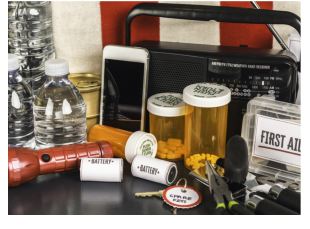
n Build a personal go-bag with all the essentials you and your family might need in the event of immediate evacuation. A basic emergency supply kit could include the following recommended items:
n Water (1 gallon per person per day for several days, for drinking and sanitation).
n Food (at least a several-day supply of non- perishable food).
n Battery-powered or hand-crank radio and a NOAA Weather Radio with tone alert.
n Flashlight.
n First aid kit.
n Extra batteries.
n Whistle (to signal for help).
n Dust mask (to help filter contaminated air).
n Plastic sheeting, scissors, and duct tape (to shelter in place).
n Moist towelettes, garbage bags, and plastic ties (for personal sanitation).
n Wrench or pliers (to turn off utilities).
n Manual can opener (for food).
n Local maps.
n Cell phone with chargers and a backup battery.
n Additional emergency supplies could include personal documents (such as home insurance), pet food, and sleeping bags.
Take time NOW to prepare: Know Your Risk, Create Plans, and Build a Kit for what is needed for you and your family because disasters will not wait until you are ready.
For additional information on how to personally prepare for emergencies, go to blue.usps.gov/nationalpreparedness/personal-preparedness.htm and ready.gov/.
— National Preparedness,
Chief Solutions and Strategy Office, 9-3-26



